

Logos & Branding
Can You Trademark an AI-Generated Logo?
Short answer: you may be able to trademark an AI-generated logo, but only if it works as a distinctive source identifier, clears conflicts, and is used correctly in commerce. AI involvement does not automatically block a trademark, but it can create ownership, copyright, originality, and file-readiness problems.
Short Answer
Maybe. The AI part is not the whole test.
An AI-generated logo is not automatically blocked from trademark protection just because AI was involved. Trademark law mostly asks whether the mark identifies your business as the source of goods or services, whether it is distinctive, whether it is used in commerce, and whether it is too close to someone else’s mark.
The practical problem is that AI can make a logo look finished before it is ownable. It may be generic, similar to an existing mark, hard to document, or stuck as a flat image instead of a working identity system.
Trademark and copyright are different. A logo can raise both issues, but each has its own test.
The USPTO cares about source identification, distinctiveness, use, and conflicts with existing marks.
For a serious launch, treat AI output as a starting point and have a human designer rebuild the final mark.
The First Mix-Up
Trademark and copyright are not the same thing.
This topic gets messy because people often use “trademark,” “copyright,” and “ownership” like they are interchangeable. They are not.
Trademark
A trademark protects brand identifiers. The USPTO explains that a trademark can be a word, slogan, design, or combination that identifies the source of goods or services. In plain English: a logo can be a trademark when customers use it to recognize your business.
Copyright
Copyright protects original creative expression, such as artwork, writing, photography, music, software, and other creative works. A logo can involve copyright questions, but the test is different from trademark protection.
For AI-generated logos, that distinction matters. A logo could potentially function as a trademark even if copyright protection for the AI-generated artwork is uncertain. But weak copyright protection can still be a business problem because it may limit your ability to control, license, or enforce the artwork beyond trademark use.
Source-backed note: The U.S. Copyright Office has stated that generative AI outputs may be protected only where sufficient human authorship is present. Prompts alone are not usually the same as creating the expressive elements of the work.
What Gets Reviewed
The USPTO does not approve a logo because it looks cool.
When reviewing a logo trademark application, the USPTO looks at whether the mark meets trademark requirements. The AI part is not the core trademark test, but AI can make those core tests harder to pass.
For an AI-assisted logo, the important questions usually include:
- Does the logo identify one business as the source of goods or services?
- Is the mark distinctive, or is it descriptive or generic?
- Is it confusingly similar to an existing live trademark for related goods or services?
- Is the logo actually being used in commerce, or is there a valid intent to use it?
- Does the application include the right drawing, owner information, goods and services, filing basis, and specimen when required?
The Real Risk
AI can make a logo look finished before it is ownable.
A polished render is not the same thing as a protectable identity. A trademark-ready logo needs a distinctive idea, clean execution, file control, consistent use, and enough documentation to support your brand story.
Five Risk Areas
Where AI-generated logos usually get shaky.
Too generic
AI often remixes common category symbols: a leaf for wellness, a shield for security, a roof for real estate, or a monogram in a circle for almost anything. Familiar is not automatically bad, but sameness makes a mark harder to defend. If the output feels generic, use this guide on how to spot an AI-generated logo design before building the brand around it.
Too similar
The USPTO says likelihood of confusion is a common reason for refusal. A mark does not have to be identical to create a problem. Similar appearance, meaning, or overall commercial impression can matter.
Copyright gaps
If the final logo is only an AI output, it may be hard to claim copyright in the artwork itself. Human-authored changes, redrawing, arrangement, and refinement can become important parts of the record. For the related ownership question, see who really owns your AI-generated logo.
Not real files
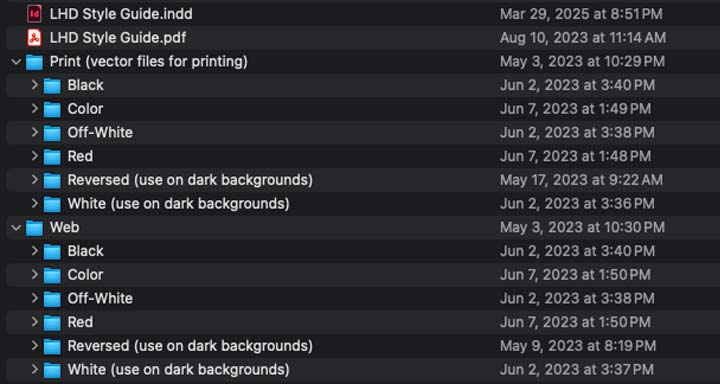
A square PNG can look good in a mockup and still fail as a logo. A serious identity needs vector artwork, one-color versions, reversed versions, small-size versions, color values, and handoff files.
Version drift
The original AI image, cleaned-up trace, refined designer version, wordmark, icon, stacked lockup, and horizontal lockup may not all be legally interchangeable. Decide what the actual mark is before filing.
Weak documentation
Keep records of tools used, human changes, working files, ownership terms, clearance searches, and final usage. A cleaner paper trail makes the brand easier to explain and protect.
A Safer Process
Use AI for exploration, then build the mark like a brand asset.
Can you file a trademark application for an AI-generated logo? Possibly. The safer path is to treat the AI output as a rough direction, then rebuild, search, document, and use the final mark consistently. A custom logo design process can turn a rough AI direction into controlled artwork, alternate lockups, and usage rules.
Decide whether AI belongs in the final logo
AI can be useful for mood, category research, and rough concepts. Before using the output, ask whether the concept is specific to the business, avoids obvious category cliches, scales cleanly, works in one color, and can be explained by a designer.
Have a human designer rebuild and refine the mark
This is not just about making it prettier. A designer can simplify geometry, create custom type, remove generic details, rebuild clean vector artwork, create alternate lockups, test use cases, and document the identity system.
Run a proper clearance search
Search for similar business names, slogans, icons, visual elements, related goods and services, and overall commercial impressions. For important launches, have a trademark attorney perform or review the search.
Choose the exact version you plan to protect
The USPTO separates drawings from specimens. The drawing shows the trademark you want to register. The specimen shows real-world use. Your use should match the mark you are trying to protect.
File with the right ownership and use details
As of January 18, 2025, the USPTO directs applicants to file new trademark applications through Trademark Center. Make sure the owner, goods and services, filing basis, mark drawing, and specimens are correct before submission.
Already Generated One?
Do not panic. Audit it before you launch around it.
If you already made a logo with an AI tool, the next move is not necessarily to throw it away. The next move is to check whether it can become a real brand mark.
- Find the AI tool’s commercial-use terms and save them.
- Document the prompt, source files, and date of creation.
- Have a designer review the concept for originality and usability.
- Run a trademark and visual similarity search before launch.
- Rebuild the final mark as clean vector artwork.
- Create primary, alternate, one-color, reversed, and small-size versions.
- Decide which version is the actual trademark.
- Ask a trademark attorney to review filing strategy.
Design Takeaway
Trademark strength starts before the application.
A stronger logo is more than a nice symbol. It is distinctive, usable, well-documented, and recognizable in the real world. That is why design process matters when legal protection matters.
Best Path Forward
For serious brands, do not stop at the prompt.
AI can be a useful brainstorming tool. It can help you explore shapes, moods, and directions quickly. But a brand identity has to survive more than a first impression. It has to work on packaging, signage, websites, invoices, apparel, ads, social profiles, and legal filings.
If your logo matters, use AI as the beginning of the conversation, not the final answer. Bring in human strategy, custom design work, clearance review, and a real file system before you invest in the launch.
The goal is not just to have a logo. The goal is to build a mark your customers recognize and your business can confidently use.
FAQ
Quick answers about AI logos and trademarks.
Can you trademark a logo made with AI?
Possibly. Trademark law focuses on whether the mark identifies your business, is distinctive, is used properly, and does not create a likelihood of confusion with existing marks. AI involvement does not automatically end the inquiry.
Can you copyright an AI-generated logo?
Purely AI-generated artwork may have limited or no copyright protection if there is not enough human authorship. Human-created or human-refined elements may be protectable, depending on the facts.
Should I use an AI logo for my business?
For a quick internal concept, maybe. For a serious brand launch, be careful. You need distinctiveness, clearance, clean files, ownership documentation, and a mark that works consistently across real use cases.
Do I need a trademark attorney?
For a major launch, yes, it is wise to involve one. A designer can build a stronger logo system, but an attorney can review legal clearance, filing strategy, ownership questions, and registration risk.
Build It Right
Need a logo that is more than a generated image?
Left Hand Design builds logo systems with strategy, custom design, clean files, and real-world usage in mind. We can help turn a rough idea into a mark your business can actually use.
Sources Reviewed