


Many AI logos look alike because the tools lean on the same training data, templates, and trend-heavy visual recipes, which pushes results toward similar shapes, gradients, and icons instead of truly original marks. For small businesses and startups, that sameness can hurt recognition and trust—distinctive, strategy-led logos crafted by a human designer stand out and scale with your brand over time.
Your Texas business deserves the best. Explore our professional logo design services in Austin, Houston, Dallas, and San Antonio.
The rise of look‑alike AI logos
AI logo generators exploded in popularity, but a noticeable convergence emerged: circular swirls, gradient rings, and techy abstract forms repeating across brands and industries. Design media and observers documented this “all look the same” pattern in 2025 as automated tools optimized for familiar motifs that feel modern but blur together at a glance. (Creative Bloq)
Why AI logos end up similar
-
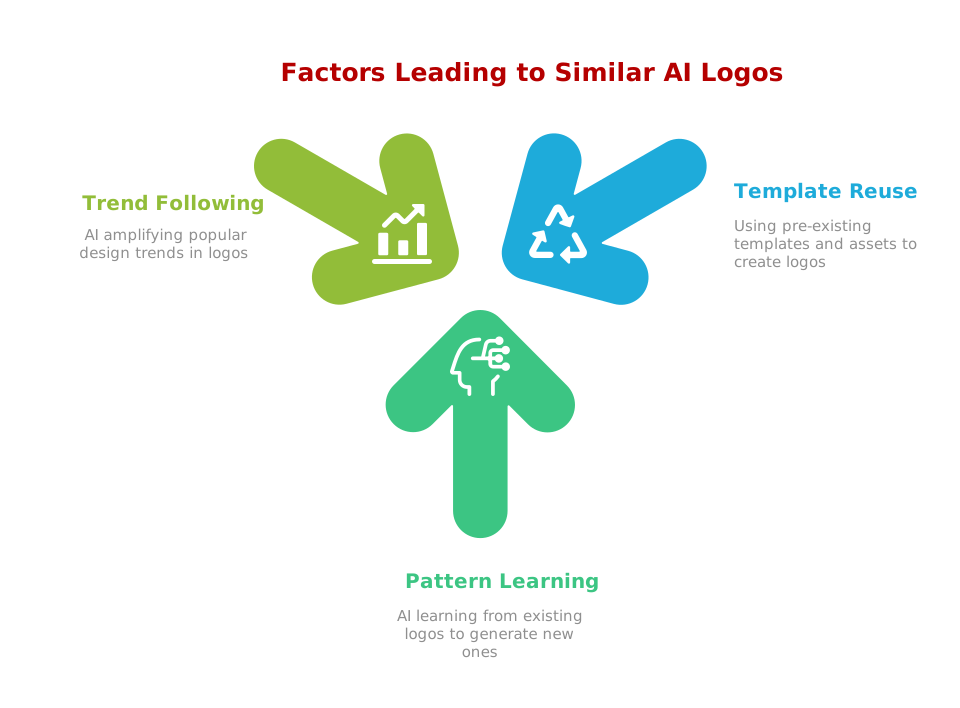
Template and asset reuse: Many tools build from constrained libraries of icons, shapes, and fonts, remixing common elements rather than inventing new visual language.
-
Pattern learning from existing logos: Generative systems learn statistical patterns from what already exists, so outputs frequently echo current aesthetics and common symbol conventions.
-
Trend-following by default: AI tends to amplify popular trends—like circular motifs and soft gradients—leading to homogeneity when thousands of businesses use the same defaults.
What AI tools can’t capture
-
Emotional nuance and story: Algorithms don’t interview stakeholders or translate brand values into symbols that resonate with specific audiences and contexts.
-
Cultural and market context: Local cues, category norms, and competitor gaps require research and judgment that automated systems don’t reliably apply.
-
Ownability and differentiation: When similar marks proliferate, distinctiveness and legal confidence suffer, creating risk and confusion for customers.
Why your startup deserves better than generic
First impressions form fast online, so a memorable, original logo helps customers pick you out in crowded feeds and marketplaces. Distinctive, well-researched identities support recall and trust, which are critical for early-stage brands competing against look‑alike peers using the same generators (Proweaver).
The human advantage
-
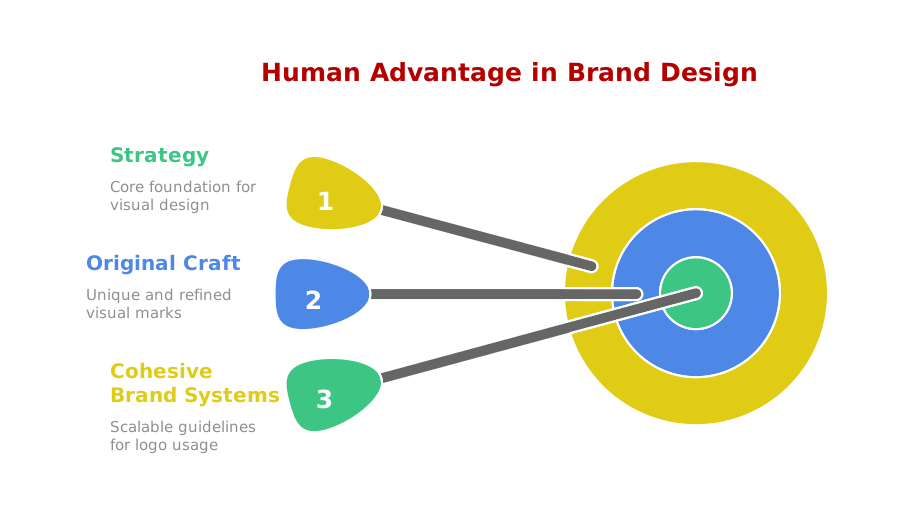
Strategy first: Designers translate your positioning, target audience, and category signals into a visual system that’s built for recognition and longevity—not just aesthetics.
-
Original craft: Custom symbol design, typography refinement, and iterative critique produce marks with clear rationale and distinct silhouettes across sizes and channels.
-
Cohesive brand systems: A designer builds scalable guidelines—color, type, spacing, motion, and usage—so your logo works in real contexts, from app icons to signage.
See our logo design work and discover how we turn ideas into unforgettable brands.
Why work with Left Hand Design
Left Hand Design creates custom logos and brand systems with an approachable, strategic process rooted in research and craft, helping Austin-born and global brands stand out with work that feels human, not cookie‑cutter. If you’re weighing generators versus a partner, consider how much you want your identity to communicate your story—and how long you need it to last across platforms and products.
Ready to build a logo that truly represents your brand? Contact Left Hand Design today to start your logo design journey!
FAQ
Q1: Can AI logo generators create a unique logo?
A: They can create variations, but because they remix existing patterns and assets, outputs often resemble other AI-made marks, especially within trend cycles like circular gradients and abstract tech forms.
Q2: What’s the main problem with AI‑generated logos?
A: Homogeneity—your mark risks looking interchangeable, which weakens recall and differentiation; that’s compounded by limited strategic discovery and context in automated workflows.
Q3: Are there legal or ownership concerns with AI logos?
A: Yes; questions can arise around originality, training data, and trademark distinctiveness, making it harder to claim or defend uniqueness in crowded visual spaces.
Q4: How do I know if my logo is too generic?
A: If similar shapes, colors, and icons appear across competitors or search results—especially common AI motifs—it’s a sign your logo lacks distinctiveness and category fit.
Q5: What will a professional designer do differently?
A: A designer conducts discovery, studies your market, and iterates toward an original, strategically grounded identity that is recognizable, scalable, and cohesive across your brand system.