


Logo & Brand Decisions
Brand Rollout Checklist
A brand rollout works when your team lists every place the brand appears, assigns owners, prioritizes high-risk items, prepares vendors and templates, and updates everything in a clear order.
Compare What You Need
How to prioritize brand rollout across business touchpoints
A brand rollout works when your team lists every place the brand appears, assigns owners, prioritizes high-risk items, prepares vendors and templates, and updates everything in a clear order.
| Area | What good looks like | Question to answer |
|---|---|---|
| Digital | Website, apps, profiles, email, listings | Broken links, stale assets, and account ownership |
| Sales and operations | Decks, proposals, forms, invoices, signatures | Employees keep using local old templates |
| Physical | Signs, vehicles, uniforms, interiors | Lead times, permits, fabrication, and installation |
| Packaging and inventory | Labels, cartons, product, shipping | Waste, compliance, and mixed versions |
| Governance | Files, templates, training, approvals | No owner controls the post-launch system |
Do not treat launch day as one giant file swap. A phased plan helps your team protect customer-facing accuracy, legal and operational needs, vendor lead times, and version control.
What to preserve
Keep the cues, assets, and working practices that already support recognition and production.
What to change
Change only what the evidence, application, or business problem requires, then document the new rule.
A brand rollout works when your team lists every place the brand appears, assigns owners, prioritizes high-risk items, prepares vendors and templates, and updates everything in a clear order.
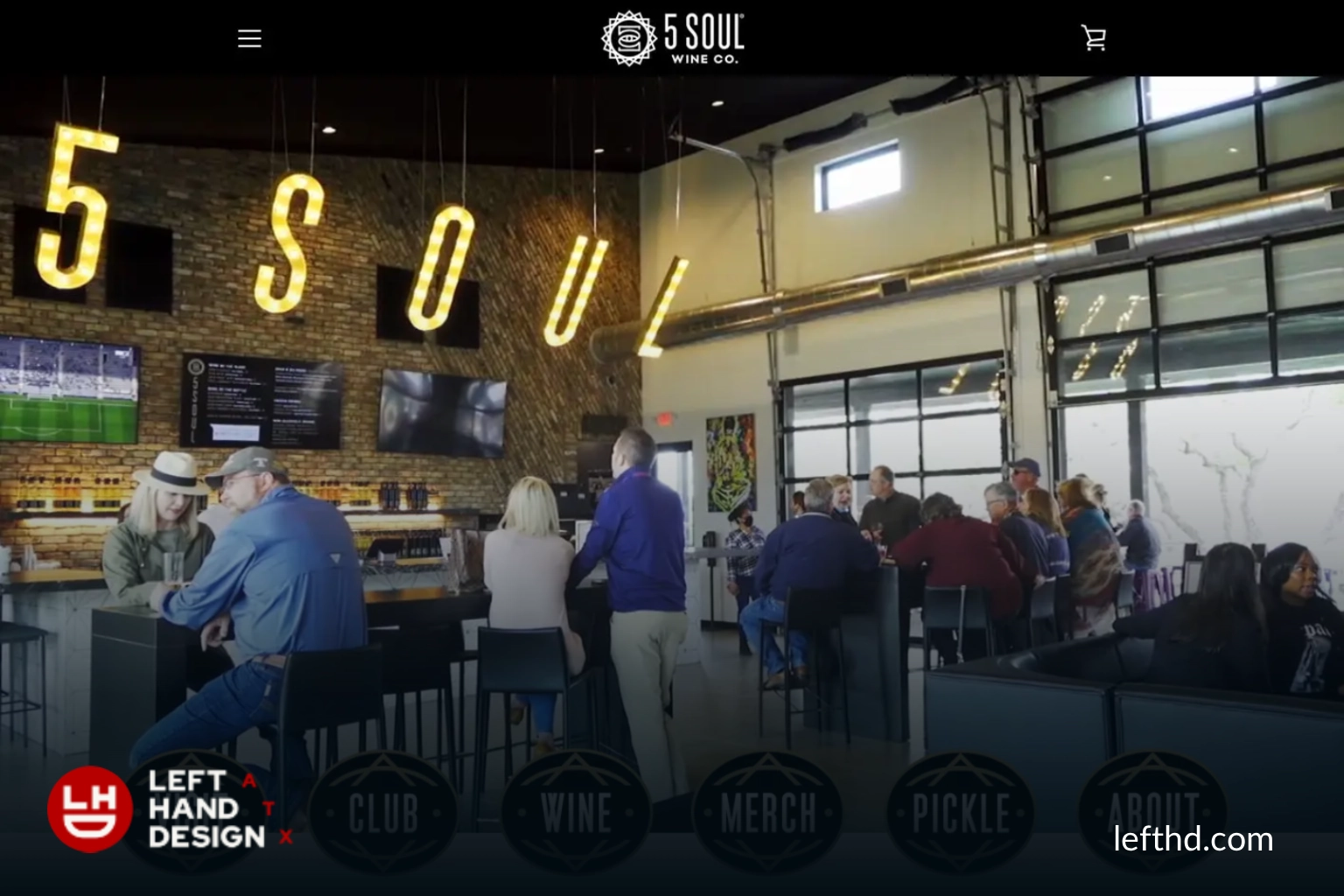
Proof note: The 5 Soul Wine Co. portfolio visibly shows identity across bottles, property imagery, apparel, and a website; an approved internal rollout inventory is still required for publication proof.
See It in Use
A rollout inventory exposes dependencies that a logo reveal cannot show.
The 5 Soul Wine Co. portfolio visibly shows identity across bottles, property imagery, apparel, and a website; an approved internal rollout inventory is still required for publication proof.
Inspect the visible application for scale, contrast, hierarchy, material, production, and context. Use those observations to ask better project questions without assuming private results.
- Digital
- Sales and operations
- Physical
- Packaging and inventory
- Governance

Avoid Common Shortcuts
Incomplete inventory can undermine an otherwise polished identity.
Unseen customer and operational touchpoints preserve the old identity.
Risk Check
Six rollout failures that leave old and new branding in conflict.
Incomplete inventory
Unseen customer and operational touchpoints preserve the old identity. Review the logo design package deliverables before approving the handoff.
No priority model
Teams update easy assets while critical or high-risk ones lag.
Vendor delay
Fabrication, print, packaging, and platform access can control launch timing. Connect the decision to a controlled brand identity system rather than treating the asset in isolation.
Mixed versions
Old and new marks appear together when source files and cutover dates are unclear.
Untrained teams
Employees improvise because templates and selection rules are not ready.
No retirement plan
Old domains, files, signs, stock, and listings remain accessible after launch.
How the Work Moves
Sequence the rollout by risk, dependency, owner, and channel.
A practical brand rollout plan connects your goals to the places the identity must work, the people who need to approve it, and the files your team will use. Continue with the logo design service when the scope needs production support.
Build the touchpoint inventory
Include customer, employee, partner, legal, digital, physical, and production surfaces.
Score risk and visibility
Prioritize assets by customer exposure, compliance, cost, lead time, and harm from inconsistency.
Assign owners and dependencies
Name the accountable person, input, vendor, approval, and target date for each item.
Prepare templates and training
Give teams the new source files, role-specific instructions, and support path before cutover.
Launch, verify, and govern
Check every priority surface, track exceptions, retire old assets, and maintain the system.
Ready-to-Launch Checklist
Brand rollout ownership and launch checklist
Use the checklist to turn a broad preference into a verifiable approval decision. Write down the decision, name the person responsible, and keep the final files easy to find.
- Every customer and employee touchpoint is inventoried.
- High-risk and long-lead items are prioritized.
- Owners and approvers are named.
- Domains, listings, and social accounts are controlled.
- Packaging, signs, vehicles, and inventory have cutover plans.
- Templates and master assets are ready.
- Teams and vendors receive training.
- Post-launch checks and governance are scheduled.
Use This Rule
Approve the system in the context where it must work.
Do not treat launch day as one giant file swap. A phased plan helps your team protect customer-facing accuracy, legal and operational needs, vendor lead times, and version control.
Decision
Launch the identity as a controlled operational change.
A brand rollout works when your team lists every place the brand appears, assigns owners, prioritizes high-risk items, prepares vendors and templates, and updates everything in a clear order.
Do not treat launch day as one giant file swap. A phased plan helps your team protect customer-facing accuracy, legal and operational needs, vendor lead times, and version control.
Use the linked logo-design service, public work, and relevant supporting guide to continue from information into a project-specific scope.
FAQ
Quick answers about brand rollout.
What is a brand rollout?
A brand rollout is the controlled implementation of a new or updated identity across digital, physical, operational, and customer-facing touchpoints.
Should every touchpoint change on launch day?
No. A phased rollout can reduce cost and risk when priorities, exceptions, and the retirement of old assets are clearly managed.
What should be updated first?
Update high-visibility, high-risk, legally sensitive, and long-lead assets first, based on the business's inventory and launch plan.
How do you prevent old logos from returning?
Control the master asset library, retire old templates, update access paths, train teams, and assign an owner for approvals and exceptions.
Who owns a brand rollout?
One accountable program owner should coordinate workstream owners across leadership, marketing, operations, digital, facilities, legal, and vendors.
Plan Your Rollout
Plan Your Rollout
A brand rollout works when your team lists every place the brand appears, assigns owners, prioritizes high-risk items, prepares vendors and templates, and updates everything in a clear order. Tell Left Hand Design what you’re building and where the identity needs to work. We’ll help you choose a clear, practical plan.