


AI Logo Decision Guide
A Practical Guide to AI-Generated Logos
AI logo tools can speed early exploration, but originality, ownership, consistency, production quality, and brand fit still require careful human judgment before a business launches.
Decision Scorecard
Approve the logo only when every launch question has evidence.
This scorecard is a decision aid, not a mathematical ranking model.
| Decision | Evidence to review | Not ready when |
|---|---|---|
| Brand fit | Audience, positioning, voice, application, and approval criteria. | The direction is supported only by vague style adjectives. |
| Distinctiveness | Competitor-pattern review, similarity notes, and documented human decisions. | The mark relies on a common category symbol without a defensible difference. |
| Rights | Tool terms, contracts, asset licenses, authorship records, and qualified clearance advice. | The team assumes a download button resolves ownership and trademark risk. |
| Production | Clean vectors, variants, color definitions, small-size tests, and organized files. | Only a raster preview or automatic trace exists. |
| Recognition | Consistent touchpoint plan, accessibility checks, baseline measures, and review dates. | No one owns the rules or knows how recognition will be evaluated. |
Mark a row ready only when the team can point to the named evidence.
This scorecard is a decision aid, not
Approve the logo only when every launch question has evidence.
Mark a row ready only when the
Approve the logo only when every launch question has evidence.
Approve the logo only when every launch question has evidence.
Evidence note: Approve the logo only when every launch question has evidence.
AI vs. Human
AI expands options. Human design connects the options to a business goal.
AI can produce a large number of visual directions from a short prompt.
A human-led process adds discovery, audience and competitor context, concept rationale, critique, revisions, production testing, and accountability for the final decision.
- Checkpoint: AI can produce a large number of visual directions from a short prompt.
- Checkpoint: A human-led process adds discovery, audience and competitor context, concept rationale, critique, revisions, production testing, and accountability for the final decision.
- The useful comparison is not machine versus person as a slogan.
- It is which work each process completes.
- Review the full AI-versus-human logo design comparison before deciding how much exploration, review, and launch support the project needs.
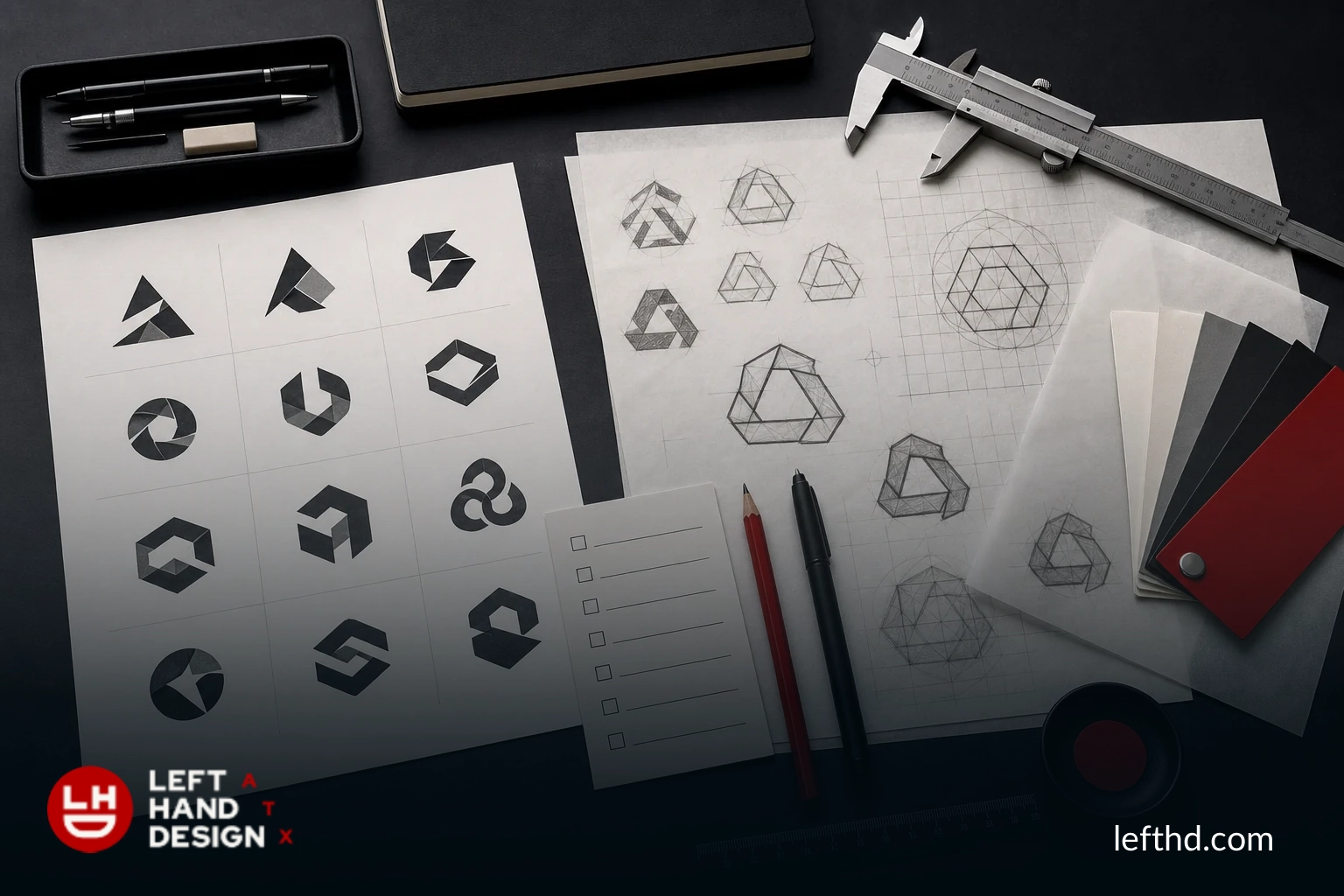
The Real Risk
AI can produce a large number of
The useful comparison is not machine versus person as a slogan. It is which work each process completes. Review the full AI-versus-human logo design comparison before deciding how much exploration, review, and launch support the project needs.
Decision Framework
Start with the job the logo must do.
A logo decision becomes clearer when the
A logo decision becomes clearer when the team separates exploration from approval.
AI logos and brand recognition.
Exploration asks whether an idea is worth
Exploration asks whether an idea is worth developing. Approval asks whether the final identity fits the business, stands apart, can be used safely, works in production, and stays recognizable across repeated use.
Use this guide in sequence: compare the
Use this guide in sequence: compare the process, calculate the real cost, examine originality and similarity, separate ownership from trademark clearance, inspect the files, test brand fit, and decide whether the logo can support a complete identity system.
AI logos and brand-style fit.
Editorial method: Left Hand Design organized this
Editorial method: Left Hand Design organized this guide around five launch questions used in professional logo review: fit, distinction, rights, production, and recognition.
It is a practical design decision framework
It is a practical design decision framework, not a claim that a visual checklist replaces legal clearance or audience research.
Start with the job the logo must
Start with the job the logo must do.
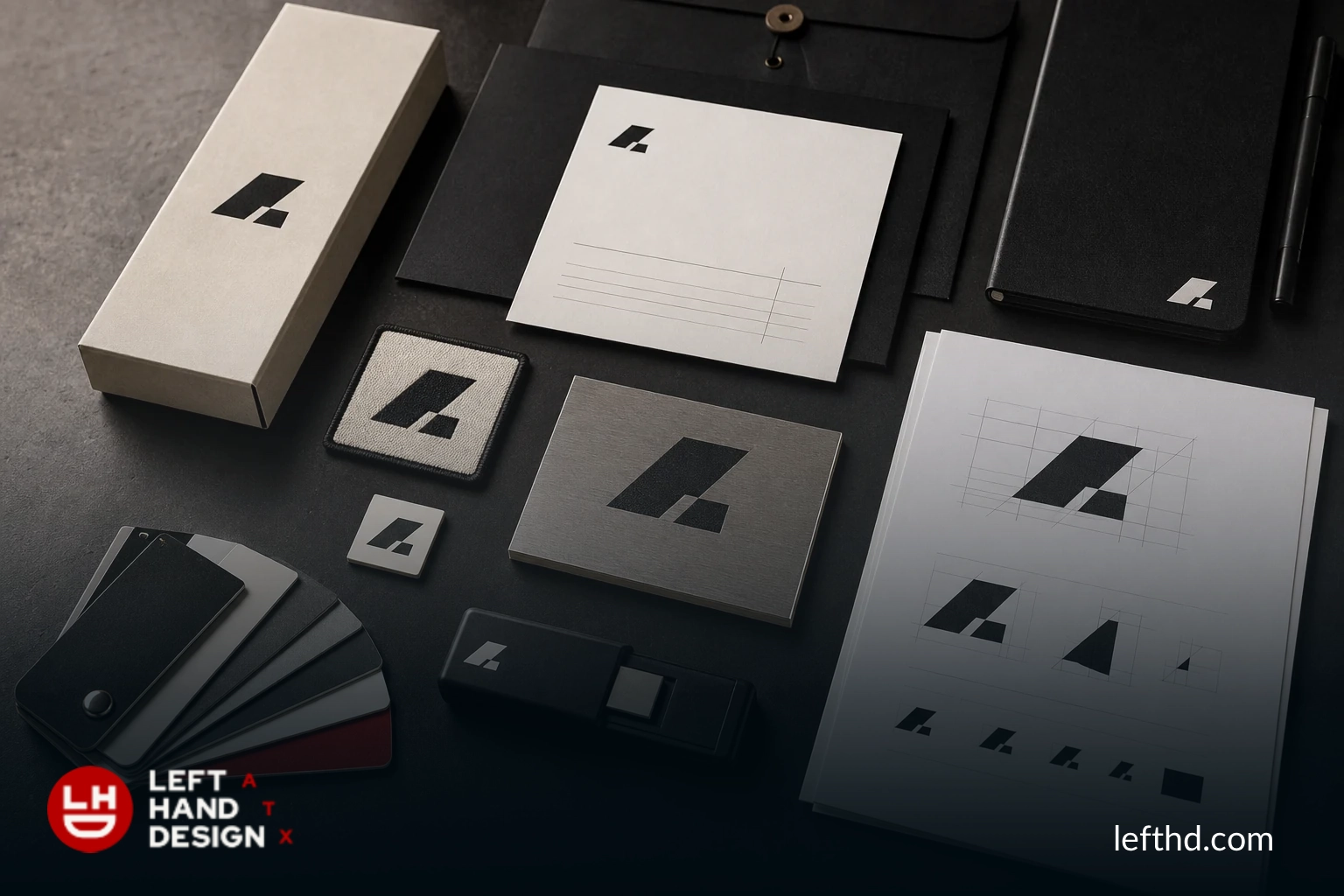
Real Cost
Compare the usable identity, not only the checkout price.
An inexpensive download may be reasonable for a temporary test or early exploration.
AI logo cost versus custom design.
An inexpensive download may be reasonable for
A public launch has a wider cost: subscriptions, revisions, vector cleanup, font and asset licensing, trademark-search support, identity guidelines, rollout assets, vendor coordination, and the opportunity cost of rebuilding later.
A public launch has a wider cost
Use the AI logo cost versus custom design guide to compare scope, exclusions, and final deliverables before approving a budget.
Use the AI logo cost versus custom
Compare the usable identity, not only the checkout price.
Compare the usable identity, not only the
Compare the usable identity, not only the checkout price.
Compare the usable identity, not only the
Compare the usable identity, not only the checkout price.
Originality and Sameness
A new-looking output can still be generic or confusingly similar.
Visual novelty, copyright authorship, ownership, distinctiveness, and trademark clearance are different tests. A generated image can look unfamiliar to the person who requested it while still relying on common motifs, predictable category symbols, default compositions, or weak typography.
- Visual novelty, copyright authorship, ownership, distinctiveness, and trademark clearance are different tests.
- A generated image can look unfamiliar to the person who requested it while still relying on common motifs, predictable category symbols, default compositions, or weak typography.
- First review whether the AI logo is genuinely original enough to develop .
- Then inspect why generated logos converge on familiar patterns and use the AI-logo file and process audit to distinguish a clue from proof.
- A new-looking output can still be generic or confusingly similar.
- A new-looking output can still be generic or confusingly similar.
- A new-looking output can still be generic or confusingly similar.
- A new-looking output can still be generic or confusingly similar.
Design Takeaway
Visual novelty, copyright authorship, ownership
First review whether the AI logo is genuinely original enough to develop . Then inspect why generated logos converge on familiar patterns and use the AI-logo file and process audit to distinguish a clue from proof.
Related Reading
Choose the next question in the decision path.
A tool may grant permission to use a downloaded output without resolving every ownership or protection question. Contracts, embedded assets, font licenses, human creative contribution, records, and jurisdiction can affect the analysis. Use the AI logo ownership and copyright guide for licenses, authorship, contracts, and records. Use the separate AI logo trademark-readiness guide for distinctiveness, goods and services, use in commerce, clearance, specimens, and application preparation.
Legal boundary: These resources provide general information, not legal advice. A qualified intellectual property attorney should review important ownership, clearance, registration, or dispute questions. A working identity needs deliberate vector paths, controlled node counts, smooth Bezier curves, rebuilt typography where necessary, defined colors, one-color and reversed versions, horizontal and stacked layouts, small-size tests, and organized SVG, EPS, PDF, PNG, and other handoff files.
The AI logo vector-conversion guide explains where automatic tracing ends and deliberate cleanup begins. A style prompt can communicate visible preferences, but a brand needs explicit criteria tied to audience, positioning, voice, category expectations, accessibility, and real applications. The logo then needs consistent variants and repeated use before customers can recognize and recall it. Use the AI logo brand-style guide to turn preferences into evaluation criteria. Then use the AI logo recognition guide to plan variants, touchpoints, accessibility checks, and measurement after launch.
FAQ
Questions about choosing and using an AI-generated logo.
Can an AI-generated logo be good enough for a business?
Yes, but the generation method does not decide readiness. The logo still needs evidence of brand fit, distinctiveness, rights review, clean production files, consistent variants, and reliable use across real touchpoints.
Is an AI logo cheaper than custom logo design?
It can have a lower entry price. The total comparison should include subscriptions, revisions, vector cleanup, licensing, clearance support, identity guidelines, rollout assets, vendor coordination, and the risk of rebuilding later.
Are AI-generated logos original?
Some outputs may look new, but appearance alone does not prove originality, human authorship, ownership, distinctiveness, or freedom from confusing similarity.
Who owns an AI-generated logo?
The answer can depend on tool terms, contracts, human creative contribution, embedded assets, licenses, records, and jurisdiction. Permission to download or use an output does not answer every ownership question.
Can an AI logo be trademarked?
An AI-assisted logo may function as a trademark, but registration and safe use depend on distinctiveness, goods and services, actual use, ownership facts, specimens, and a proper clearance review.
Build It Right
Turn the promising direction into an identity the business can use.
Choose With Evidence
Sources & Further Reading