

Define the mark and its intended use
For a U.S. launch, begin with the exact wording and design, the business that will own the mark, the goods or services, and the places customers will encounter it. A logo needs to help identify the source of those offerings. A decorative image or a generator download does not settle that question.
The USPTO distinguishes trademark and copyright protection: they cover different interests and require separate analysis. This article provides general design and U.S. trademark context, not legal advice. Ask a qualified trademark attorney to assess your facts, intended markets, clearance, and filing strategy.
Search beyond exact matches
Compare the final candidate with relevant wording and designs used for related goods or services. The USPTO’s likelihood-of-confusion guidance considers more than identical artwork: appearance, sound, meaning, and overall commercial impression can matter. A different color or a new arrangement does not, by itself, resolve a possible conflict.
A comprehensive clearance search also looks beyond the federal database, including relevant state records and marketplace use. Use research to prepare questions, then have an attorney interpret material findings before a costly rollout. Finding no exact match is not a clearance opinion.

Keep permissions and authorship separate
Save the generator’s applicable terms, plan details, font and asset licenses, prompts, outputs, and human revision records. Commercial-use permission does not establish trademark availability. The Copyright Office’s 2025 copyrightability report treats human authorship separately and explains why prompts alone do not provide sufficient control under the technology it reviewed; editing or tracing an output does not automatically guarantee protection.
Keep every approval tied to the same final mark.
Review each launch decision on its own terms
Use the exact candidate artwork, wording, business details, and intended goods or services for every review. Record which version each person reviewed and what remains unresolved. Design refinement can improve clarity and usefulness, but a production-ready file does not establish legal clearance or acceptance of a trademark application.
| Review | Question to resolve | Record or next action |
|---|---|---|
| Source identity | Does the mark distinguish the intended goods or services? | Have counsel assess distinctiveness and other registration requirements. |
| Conflicts | Could relevant customers confuse it with another mark? | Preserve search findings and obtain legal interpretation. |
| Permissions | What do the tool and asset terms permit? | Keep the applicable terms and review restrictions and third-party assets. |
| Copyright | Which human-authored expression, if any, is protectable? | Keep drafts and edits; seek advice on claims and registration. |
| Production | Does the approved artwork work in the required applications? | Check master files, variants, exact-size outputs, and vendor specifications. |

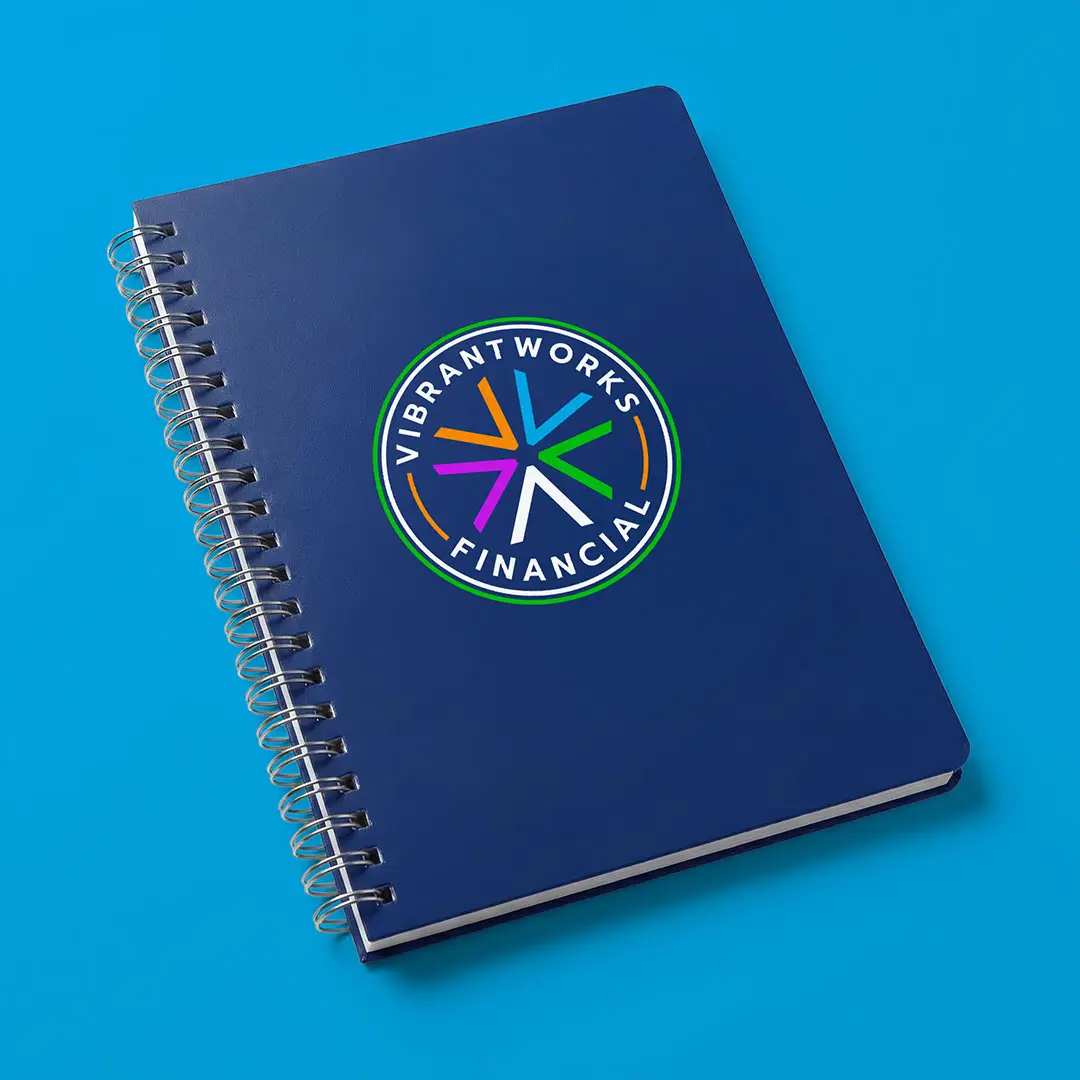
The Vibrantworks Financial project shows a coherent identity across published applications. It illustrates design consistency, not AI involvement, trademark registration, a clearance result, or a client filing specimen. For the artwork side of the handoff, our logo package deliverables guide explains the files and variants to discuss.
Prepare artwork and accurate use records
Keep approved masters, export rules, and dated records of actual use together. The USPTO distinguishes a drawing of the mark from a specimen of use. A design mockup does not show actual marketplace use. Have counsel confirm the appropriate filing basis, drawing, and any evidence required at the relevant stage.
Check the smallest digital placement and hardest physical application first, then retest any corrected artwork against the same specifications. Coordinate material changes to the mark with counsel before treating an earlier review as current. Our AI logo ownership and copyright guide expands the separate authorship and rights questions.

When to bring us in
Bring Left Hand Design in when an early direction needs a clear, consistent visual system and usable production files. Our logo design and brand identity services can support that work while your trademark attorney handles clearance, legal risk, and filing advice.